Casinos That Accept PayPal in Australia: What’s Confirmed
 Available in AU
PayPal’s general availability does not confirm that a casino accepts it or is permitted to offer online pokies in Australia.

Table of Contents
- PayPal and the Australian Online Pokies Context
- PayPal Deposits: What the Available Evidence Establishes
- Assessing Claims About PayPal-Accepting Casino Sites
- Withdrawal Speed and Access to Winnings
- The 2026 Search: What Can Be Confirmed
- Payment Compatibility and Casino Games
- Australian Payment Habits and PayPal
- PayPal Withdrawals: Availability and Evidence Gaps
- Paying with PayPal: Transaction Checks
- PayPal Casino Bonuses and Promotion Limits
PayPal and the Australian Online Pokies Context
The phrase “Australian online casino” can describe a service aimed at people in Australia, but it does not establish that the service is legally permitted to operate here. That distinction matters when considering claims about PayPal and online pokies. A payment method’s general availability is separate from the legal status of the gambling service, and neither establishes that a particular casino accepts that method.
Under the Interactive Gambling Act 2001, operators may not provide real-money online casino games to people in Australia. The prohibition covers casino-style games such as pokies, as well as poker and table games. It applies to the operator’s provision of the service; it does not make an individual player criminally liable simply for using an offshore casino. These are different legal positions, and treating them as equivalent would misstate the law.
The Australian Communications and Media Authority, commonly known as ACMA, enforces the Act. Offshore casino services are subject to active blocking and enforcement in Australia. Their existence, or a claim that they cater to Australian customers, should therefore not be read as evidence that they are locally authorised. Nor does a payment option make an otherwise prohibited service lawful.
Choosing a casino for PayPal in Australia calls for checking the details that matter to you, such as licensing, deposit minimums and available payout information. Use these notes as a starting point, and verify PayPal availability directly with each casino before depositing.
License: Curacao eGaming OGL/2023/174/0082 (Dama N.V.) · Min. deposit: A$15 LevelUp Casino is listed with a Curacao eGaming licence, OGL/2023/174/0082, held by Dama N.V. Its minimum deposit is A$15.
License: Curacao · Payout speed: crypto 30-60 minutes, fiat 1-5 days · Min. deposit: A$10 Wild Tokyo lists a Curacao licence and a minimum deposit of A$10. Its stated payout times are 30–60 minutes for crypto and 1–5 days for fiat.
License: Curacao, operated by Dama N.V. 7Bit Casino is operated by Dama N.V. and lists a Curacao licence.
License: Tobique Gaming Commission · Payout speed: crypto ~10-15 minutes, fiat 1-5 days · Min. deposit: A$30 SkyCrown lists a Tobique Gaming Commission licence and a minimum deposit of A$30. Its stated payout times are around 10–15 minutes for crypto and 1–5 days for fiat.
Payout speed: crypto under 1 hour, PayID 1-3 business days · Min. deposit: A$20 (A$30 to qualify for the bonus) Ricky Casino has a A$20 minimum deposit, rising to A$30 to qualify for the bonus. It lists crypto payouts under an hour and PayID payouts in 1–3 business days.
License: Curacao eGaming (Hollycorn N.V., since 2017) · Min. deposit: A$20-30 (depends on the offer) Playfina Casino lists a Curacao eGaming licence held by Hollycorn N.V., dating from 2017. Its minimum deposit is A$20–30, depending on the offer.
License: Curacao – Antillephone N.V. (Versus Odds B.V.) · Min. deposit: EUR 20 Thor Casino lists a Curacao licence through Antillephone N.V. (Versus Odds B.V.). Its minimum deposit is EUR 20.
License: Curacao OGL/2024/1335/0780 · Min. deposit: EUR 20 Vegaz Casino lists Curacao licence OGL/2024/1335/0780. Its minimum deposit is EUR 20.
License: international iGaming licence – jurisdiction not named in the source · Payout speed: PayID 1-24 hours · Min. deposit: A$30 (PayID from A$10) House of Pokies lists an international iGaming licence, though the jurisdiction is not named in the source. Its minimum deposit is A$30, or A$10 for PayID, and stated PayID payouts take 1–24 hours.
License: Curacao eGaming (Roby Games Ltd) Roby Casino lists a Curacao eGaming licence held by Roby Games Ltd.
What “Australian” can mean
In ordinary descriptions, “Australian casino” may refer to a site that accepts Australian currency, displays information for Australian customers, or is promoted as serving the country. Those characteristics do not alter the legal framework. The relevant distinction is whether an operator is providing prohibited real-money casino gambling to people physically located in Australia—not the wording used to market or describe the service.
This distinction also limits what can be inferred from a PayPal claim. A page or listing that uses Australian language alongside PayPal does not, by that combination alone, establish lawful local operation, current access, or a verified payment arrangement. It is important not to collapse three separate questions: whether a casino service is permitted in Australia, whether a particular operator claims to serve Australian users, and whether PayPal is available for a transaction. Evidence about one does not settle the others.
Familiarity with a payment service among consumers does not demonstrate that a gambling operator offers it, or that a transaction would be available in a specific setting. The legal context must be considered independently from general payment use.
The position of players
The Act’s restriction is directed at operators providing the prohibited service. It does not explicitly criminalise an Australian player for using an offshore site. That distinction should not be mistaken for a guarantee that an offshore service is safe, accessible, or protected by Australian consumer law. Australian consumer law does not protect players who use offshore casinos.

The absence of player criminal liability is therefore a narrow point about the legal position under the Act, not an endorsement of offshore gambling. It does not convert an offshore casino into a locally authorised business, and it does not remove the risks that arise when a service is outside Australian consumer protections. A claim that a site welcomes Australian players cannot, on its own, establish what recourse a customer would have if a dispute arose.
Reading PayPal references in context
A reference to PayPal in material about Australian pokies should be treated as a payment claim, not as evidence of legality. Likewise, a site’s apparent association with Australia does not show that its casino games may lawfully be offered to people here. The Interactive Gambling Act applies to the provision of the gambling service, while a payment label concerns how a transaction is described or handled. Those matters should not be conflated.
Accordingly, “Australian online casino that accepts PayPal” is not a reliable legal category in itself. It may combine a geographic marketing description with a payment-method assertion, while leaving the operator’s legal status unresolved. The same caution applies to references to mobile casinos: the device used to access a service does not change the statutory position on real-money online casino games.
Legal Prohibition
Under the Interactive Gambling Act 2001, operators are prohibited from providing real-money online casino games to people in Australia.
The established context is clear even where a payment claim is not: operators are prohibited from providing real-money online casino games to people in Australia, ACMA enforces that rule, and players are not explicitly criminalised by the Act for using offshore sites. Australian consumer law does not protect those players. PayPal’s presence in a description cannot change any of these points or, by itself, verify that a particular casino accepts the service.
PayPal Deposits: What the Available Evidence Establishes
Australian consumers are comfortable moving between cards, mobile wallets and services linked to bank accounts, including PayPal. That familiarity describes payment habits in general. It does not establish that a particular online casino cashier offers PayPal, or that an attempted payment to a gambling service would be accepted. The distinction matters because a payment method’s presence in everyday commerce is not evidence of its availability for a specific transaction.
A deposit made through PayPal would involve a chain of separate decisions: the casino would need to present PayPal as an available method, the account and transaction would need to be eligible, and the payment would need to be accepted. General familiarity with PayPal supports none of those casino-specific conditions on its own. Nor does it show that a payment would be processed in a particular way or appear in an account within a particular period.
The same distinction applies to deposit amounts. A stated minimum or maximum is a condition set for a particular cashier and transaction, not a property of PayPal as a payment service. A search for a small PayPal deposit does not establish that such an amount is permitted, that it would be accepted, or that the same condition would apply across operators. Without a confirmed cashier rule, no figure can be treated as a PayPal deposit threshold for Australian casino use.

Fees require the same care. Familiarity with a payment service cannot establish whether a casino, payment provider or financial institution would apply a charge to a particular transaction. Any fee depends on the terms governing that transaction; it cannot be inferred from the fact that consumers use bank-linked services. A claim that PayPal deposits are free, or that a charge will apply, therefore requires transaction-specific support.
Processing time is also distinct from payment-method familiarity. Knowing that Australians use PayPal does not show whether a casino would record a deposit immediately, whether an attempted payment might be delayed, or whether an account would be credited at all. Those outcomes depend on arrangements and decisions beyond general consumer habits. An unsupported description of a deposit as instant or fast would turn an assumption into a claim about a financial transaction.
The phrase “deposit by PayPal” can also conceal several different questions. It may refer to whether the method appears in a cashier, whether it can be selected for an account registered from Australia, whether a transaction can be completed, or whether it is available for a particular amount. These are not interchangeable. A method displayed in a list would not, by itself, prove that every account or payment attempt could use it.
Even a successful payment in one setting would not establish a general rule. Payment options and conditions can be specific to the operator, the customer’s circumstances and the transaction being attempted. A description of consumer comfort with PayPal cannot support a broader conclusion about all casino cashiers, nor can it justify a recommendation that one casino is the best choice for PayPal deposits. Such a comparison would require dependable, current evidence about the relevant operators and their actual payment arrangements.
Payment Context
General familiarity with PayPal among Australian consumers does not establish that a particular online casino offers it as a cashier option.
The legal setting is important when interpreting claims about these transactions. Under the Interactive Gambling Act 2001, operators are prohibited from providing real-money online casino games to people in Australia. Australian consumer law does not protect players who use offshore casinos. Familiarity with a payment service does not alter either point or make an offshore casino transaction equivalent to an ordinary purchase from an Australian business.
Consequently, the narrow conclusion is that PayPal is familiar to Australian consumers as a bank-linked service, while that general familiarity cannot substantiate its availability for a casino deposit. It does not establish a cashier option, an acceptable deposit amount, fees, processing time or successful payment. Those details should not be inferred from the payment method’s wider use.
Assessing Claims About PayPal-Accepting Casino Sites
A statement that an online casino accepts PayPal is a claim about a particular operator, not a conclusion that can be drawn from PayPal’s general presence in Australia. Payment services may be familiar to consumers, but familiarity does not establish that a gambling business can receive payments through them. Nor does a payment logo, a search result or a promotional description, by itself, demonstrate that a transaction is available to people in Australia.
The claim also needs to be distinguished from several related ones. A site might refer to PayPal in general terms without specifying whether it supports deposits, withdrawals, or both. It might describe availability in another country, or rely on information that no longer reflects its current arrangements. These distinctions matter when evaluating statements about a PayPal casino or a site said to accept PayPal payments: the wording can sound definitive while leaving the actual scope unclear.
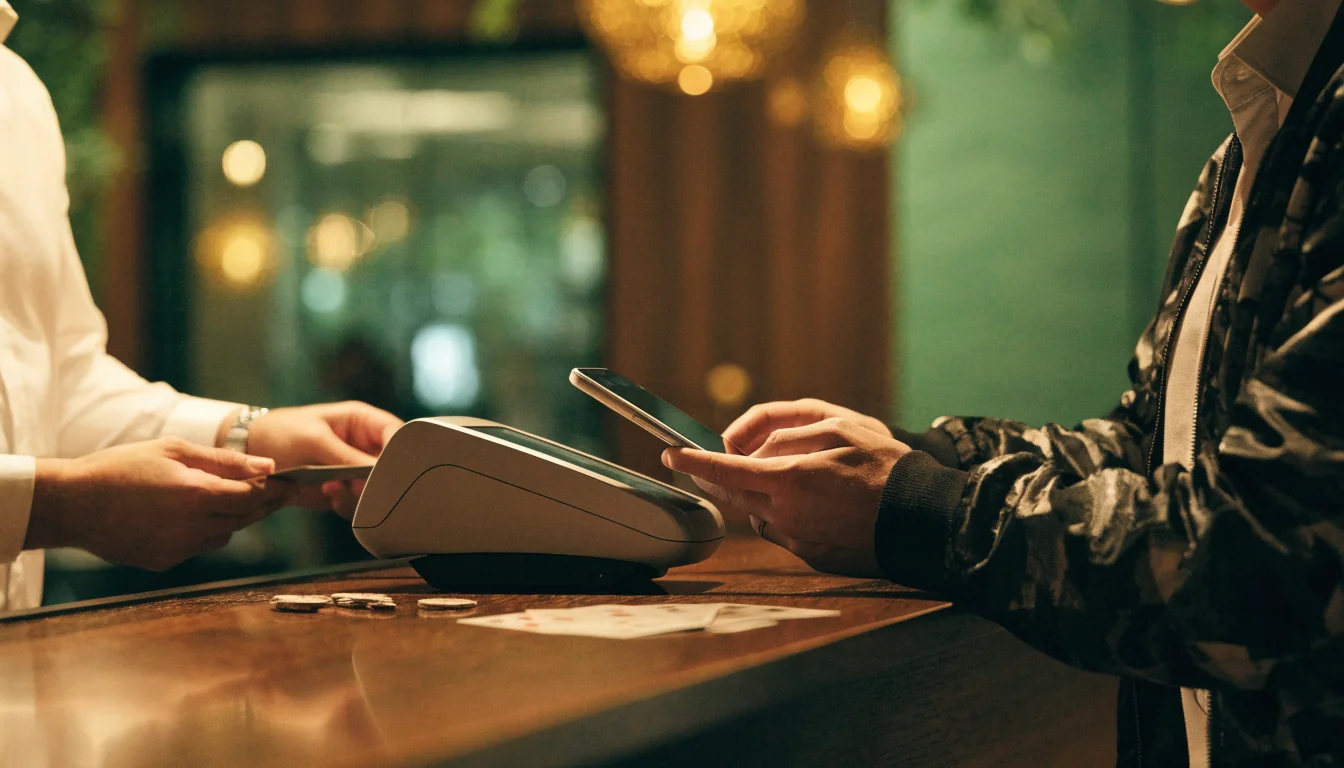
A substantiated acceptance claim would need to be specific to the operator, the relevant jurisdiction and the transaction being described. It would also need to reflect the operator’s current position rather than a past listing or an unqualified third-party summary. Even then, evidence that a payment option appears in a cashier would establish only a payment-method claim. It would not establish that the operator is lawful in Australia, that its services are available here, or that Australian consumer protections apply.
That legal distinction is central. Under the Interactive Gambling Act 2001, operators are prohibited from providing real-money online casino-style games to people physically located in Australia. The prohibition covers services involving casino games, including poker and pokies. The Australian Communications and Media Authority is responsible for enforcing the Act, and offshore services are subject to blocking and enforcement measures. The law does not explicitly make an individual player criminally liable for using an offshore site, but that does not make the operator’s service lawful or imply that it is protected or endorsed.
Australian consumer law does not protect players who use offshore casinos. As a result, a confident statement about payment acceptance should not be confused with assurance about the status of the service or the remedies available if a dispute arises. A payment brand’s appearance in a description does not convert an offshore casino into an Australian-authorised service.
Summary of Claims
- A PayPal claim is a payment assertion, not evidence of legal operation.
- Payment availability is separate from the legal status of the gambling service.
- Australian consumer law does not protect players who use offshore casinos.
There is also a difference between evidence of a payment method and evidence supporting a “best” designation. A ranking would require a defensible basis for comparing operators, and the comparison would have to address the same relevant criteria for each one. A bare acceptance claim cannot establish comparative quality, reliability or suitability. Without such a basis, naming a site as one of the best PayPal options would go beyond what the payment claim itself can show.
This is particularly important where language groups together PayPal payments, casino games and Australian availability. A site may make a broad claim about payment options, while a separate question concerns whether the service is accessible to Australians and lawful to offer here. Treating those as interchangeable can give a misleading impression. Neither a payment method nor an online listing settles the legal status of a gambling service.
Accordingly, claims about Australian casino sites that accept PayPal should be read narrowly. They may assert that a particular business supports a particular payment arrangement, but they do not independently prove the claim’s current accuracy, establish an Australian right to access the service, or justify a ranking. In this market, payment-method language cannot be separated from the legal restriction on operators providing online casino games to people in Australia.
Withdrawal Speed and Access to Winnings
A deposit and a withdrawal are separate transactions. A payment method appearing in a cashier for incoming funds would not, by itself, establish that the same method can receive winnings. Nor would a quick deposit demonstrate that a later withdrawal could be completed just as quickly. The phrase “instant withdrawal” therefore describes a claim about access to funds, not a conclusion that follows from the speed of a payment in the opposite direction.

Withdrawal timing can refer to different stages. A request may need to be reviewed before it is sent for payment, and the time taken for funds to arrive is distinct from the time taken to assess the request. Those stages should not be collapsed into a single speed claim. In particular, a description of a payment as instant does not establish that an operator has approved a withdrawal, that a receiving account can accept it, or that the funds are available for use.
Account checks are relevant to this distinction. Online casinos typically require a Know Your Customer assessment before financial transactions. That requirement concerns the account and the customer’s identity; it does not establish a PayPal withdrawal route or determine how long a transfer would take. The completion of a check and the processing of a payment are separate matters.
The Australian legal setting also affects how claims about casino withdrawals should be understood. Under the Interactive Gambling Act 2001, it is illegal for operators to provide real-money online casino games to people physically located in Australia. The Australian Communications and Media Authority is responsible for enforcing the Act. The law does not explicitly criminalise players for using offshore sites, but Australian consumer law does not protect people who use offshore casinos. A claim about quick access to winnings does not alter those legal conditions or supply consumer protection.
Withdrawal Risks
Attention A description of a payment as instant does not guarantee that an operator has approved a withdrawal or that funds will arrive immediately.
Searches for a PayPal casino withdrawal in Australia can blur several distinct issues: whether a payment service is accepted for deposits, whether it is available for withdrawals, whether an account has met transaction checks, and how long funds take to become accessible. These questions require separate answers. General familiarity with PayPal as a bank-linked service cannot establish that a casino offers it as a withdrawal method, and a statement about deposits cannot be extended to withdrawals without additional support.
The word “instant” is especially easy to overread. It may be used to describe a claimed processing feature, but it does not specify what event is immediate: submission of a request, approval, release of funds, or receipt in an account. Without a clear definition, the label cannot be treated as a precise measure of when winnings become available. It also says nothing about fees or other conditions.
This distinction matters for searches concerning real-money pokies and no-deposit offers as well. A promotion or a deposit arrangement, even if described in those terms, would not prove that winnings could be paid through PayPal or that they would arrive instantly. Access to winnings is a separate transaction question, not an automatic consequence of a payment method’s presence elsewhere in a cashier.
Accordingly, “instant PayPal withdrawal” should be read as a specific claim about the route and timing of a payout, rather than as a general feature of PayPal or of online payments. It should not be taken to establish either availability for Australian casino customers or immediate access to winnings.

The 2026 Search: What Can Be Confirmed
The distinction matters because a payment method’s general availability does not demonstrate that it is offered by a casino, or that an Australian customer can use it there. PayPal is familiar to Australian consumers, but familiarity is not evidence of casino acceptance. Nor does a site’s reference to PayPal, without clear and current terms for Australian customers, establish that the payment option is available to them.
The phrase “best casino that accepts PayPal” also implies more than payment compatibility. A defensible comparison would require confirmed acceptance as well as reliable information about the services being compared.
There is also a separate legal issue. Under the Interactive Gambling Act 2001, it is illegal for operators to provide real-money online casino games to people physically located in Australia. The Australian Communications and Media Authority is responsible for enforcing that law. The prohibition concerns operators; it does not explicitly criminalise players for using offshore sites. However, Australian consumer law does not protect players who use offshore casinos.
This does not establish that PayPal is accepted, nor that a site presenting itself as available to Australians is lawful to provide casino services. Payment branding alone cannot settle either question.
The precise conclusion is limited: no Australian casino accepting PayPal in 2026 can be confirmed. That is different from proving that no operator anywhere offers PayPal, and it is also different from proving that a particular site accepts it for Australian customers. Those broader claims would require current, specific evidence and should not be inferred from general payment familiarity or from an unqualified site description.

The legal position remains relevant regardless of the payment label. PayPal availability, if claimed, would not alter the restriction on operators providing real-money online casino games to people in Australia. Nor would it create consumer-law protection for Australians using offshore casinos. A payment method cannot establish the legality of a service or make its provision lawful.
Payment Compatibility and Casino Games
A payment method and a game catalogue describe different aspects of an online service. PayPal, where offered by a business, concerns how a transaction is handled; it does not by itself identify which games that business provides or establish that a payment can be used for a particular game. Likewise, a game’s presence on a site would not demonstrate that PayPal is available at checkout. These distinctions matter because phrases linking PayPal with casino games can suggest a single compatibility claim when payment acceptance and game access are separate questions.
The term “PayPal payment option” may refer to a general cashier facility rather than a feature attached to any particular game. It should not be read as confirmation that PayPal can fund a specific game-related transaction, or that a service is available to people in Australia. Payment availability can only be understood in the context of the relevant operator, transaction and location; a broad label alone does not establish those details.

There is also a material legal distinction between describing payment technology and offering casino play. Under the Interactive Gambling Act 2001, it is illegal for operators to provide real-money online casino games to people physically located in Australia. Casino-style offerings such as poker, blackjack, roulette and pokies fall within the prohibited services when supplied to customers in Australia. The Australian Communications and Media Authority is responsible for enforcing the Act. These rules concern operators’ provision of services; they do not make a player criminally liable merely for using an offshore site.
That legal position means an apparent match between a payment brand and a game category should not be treated as evidence of a lawful Australian service. Nor does a payment label determine whether an offshore operator is accessible, whether a transaction will be accepted, or what consumer protections apply. Australian consumer law does not protect players using offshore casinos, so the distinction between a payment claim and a service claim has practical consequences as well as technical ones.
References to casino games with PayPal therefore need careful interpretation. They can conflate the method used to move funds with the separate question of what an operator offers, and may imply local availability where the law prohibits operators from providing the underlying real-money casino service. A payment brand cannot change that legal status. Describing the relationship accurately requires keeping transaction method, game content, operator conduct and Australian access separate rather than treating them as one feature.
- Treat PayPal references as simple payment claims.
- Consider the legal context of the Interactive Gambling Act 2001.
- Conflate payment familiarity with legal local authorisation.
- Assume deposit speed guarantees withdrawal speed.
Australian Payment Habits and PayPal
Australian payment habits provide context for understanding why PayPal may be familiar, but they do not establish that an online casino accepts it. Contactless credit and debit card payments are widely used across the country, as are mobile wallets such as Google Pay and Apple Pay. Consumers are also comfortable moving between cards, mobile wallets and services connected with bank accounts, including PayPal.
That familiarity is a feature of everyday payment behaviour, not evidence about a particular merchant or transaction type. A service’s use in ordinary commerce cannot confirm that it is available in a casino cashier, nor that a payment would be permitted or processed in a specific setting. The distinction matters because a familiar payment brand can appear in many contexts without being supported by every business.
The phrase “PayPal casino in Australia” can therefore refer to two different ideas: a payment service that Australian consumers know, and an online gambling operator that accepts it. The first is consistent with broad consumer use of bank-linked services. The second requires evidence about the operator and its payment arrangements; general familiarity alone cannot supply it. The same principle applies to cards and mobile wallets: widespread acceptance in day-to-day commerce does not show that they can be used for online gambling.
There is also a separate legal and consumer-protection context. The Interactive Gambling Act 2001 prohibits operators from providing real-money online casino games to people in Australia. Australian consumer law does not protect players who use offshore casinos. These points should not be conflated with whether a payment service is familiar or available in ordinary retail transactions.

Accordingly, PayPal’s place in Australian payment habits helps explain its recognition, but it cannot serve as a shortcut for identifying a lawful or accessible casino service. Payment familiarity, merchant acceptance and the legal status of an online gambling service are distinct matters.
PayPal Withdrawals: Availability and Evidence Gaps
A PayPal deposit and a PayPal payout are separate functions. The presence of PayPal as a way to fund an account would not, by itself, show that winnings could be sent back through the same service. “PayPal withdrawal” describes a specific route for transferring funds out; it should not be treated as a synonym for general PayPal support.
That distinction matters when evaluating references to an online casino with PayPal withdrawals. A claim about payouts needs to identify the transaction direction and the relevant terms, rather than relying on a payment logo or a general list of cashier methods. Without that distinction, a description may imply that PayPal handles both incoming and outgoing payments when it refers only to one.
The Australian legal position also shapes how such claims should be understood. Under the Interactive Gambling Act 2001, operators must not provide real-money online casino games to people in Australia. The Australian Communications and Media Authority enforces the Act. The law does not explicitly criminalise an individual for using an offshore site, but Australian consumer law does not protect people who use offshore casinos. A statement about a payout method does not alter those conditions or establish that a service is lawful to provide in Australia.
Does using PayPal make a casino legal in Australia?
No, a payment option does not make an otherwise prohibited service lawful.
Are players liable for using offshore casinos?
Under the Act, the prohibition applies to the operator, not the individual player.
Does PayPal support both deposits and withdrawals?
A site may support one but not the other; acceptance of deposits does not guarantee withdrawal availability.
The wording “PayPal withdrawal pokies Australia” therefore combines two questions that should remain distinct: whether an operator offers a payout route and whether it may provide online casino games to people in Australia. Payment availability cannot answer the second question. Nor does a general claim about casino withdrawals establish PayPal-specific availability, eligibility rules, fees or processing arrangements.
For an accurate description, withdrawal support would need to be stated separately from deposit support and tied to clear operator terms. In the absence of that distinction, claims about a casino withdrawal through PayPal should not be read as evidence that the payment method is available for receiving winnings.
Paying with PayPal: Transaction Checks
A payment option and an identity check serve different purposes. PayPal describes how a transaction might be funded or routed; Know Your Customer (KYC) checks concern the identity of the account holder. A casino’s cashier may display payment options, but that display does not establish what checks apply before a financial transaction can proceed.
Online casinos commonly require customers to undergo KYC assessment before handling financial transactions. The assessment is a separate part of account and transaction control, rather than a feature specific to PayPal. Its existence should not be read as confirmation that a particular cashier supports PayPal, or that a PayPal payment will be accepted.
This distinction matters when interpreting claims about paying by PayPal at a casino. A reference to identity checks does not answer whether PayPal is available, how a checkout is arranged, or what conditions apply to a transaction. Nor does the presence of a payment logo, by itself, establish that a method can be used for every financial activity connected with an account.
The Australian legal setting also limits how such services should be understood. Under the Interactive Gambling Act 2001, operators are prohibited from providing real-money online casino games to people in Australia. The law does not explicitly criminalise players for using offshore sites, but Australian consumer law does not protect people who use offshore casinos. A payment route or identity assessment does not change those legal and consumer-protection considerations.

Accordingly, KYC is best understood as an account-verification requirement that may apply before casino financial transactions, not as evidence of PayPal compatibility. Claims about a PayPal cashier, its checkout steps or the handling of a payment need to be assessed separately from the general fact that casinos conduct identity checks. The two issues are related to account use, but one cannot establish the other.
PayPal Casino Bonuses and Promotion Limits
A payment method and a promotional offer are separate features. PayPal appearing among a casino’s cashier options would not, by itself, establish that a bonus is available to people using it. Likewise, a bonus described as suitable for PayPal would not confirm that the payment service is accepted for deposits or withdrawals. These claims require distinct evidence and should not be treated as interchangeable.
In Australia, promotion claims also sit within a restrictive legal environment. The Interactive Gambling Act 2001 prohibits operators from providing real-money online casino games to people physically located in the country. Advertising real-money interactive gambling services, including online casinos, to Australian audiences is prohibited. Australian consumer law does not protect players who use offshore casinos. A promotion cannot be considered separately from these restrictions simply because it refers to a payment brand rather than a game.
Gambling advertising is also subject to limits on inducements and promotions, with particular restrictions applying during specified broadcast hours. That context matters when assessing claims about payment-linked bonuses: the wording, audience and means of promotion can all affect whether an advertisement is permissible. A commercial disclosure does not make an otherwise prohibited casino promotion acceptable.
Accordingly, a claim that PayPal users receive a casino bonus should not be read as evidence of a legitimate or accessible offer for Australians. Nor does a payment logo establish the terms, eligibility or legal status of a promotion. The relevant distinction is between payment compatibility and promotional advertising; neither should be inferred from the other.
How do you check if casino sites accept Amex deposits?
Check the casino’s cashier for American Express before depositing. Some casinos do not accept Amex, and Visa may be more widely accepted.
What are the deposit and withdrawal limits at the best Amex casinos?
Each casino sets its own Amex deposit and withdrawal limits, so check the limits shown in that casino’s cashier. Amex limits are usually higher than those for Visa or Mastercard.
Are there any fees associated with using American Express at online casinos?
Amex deposits are typically free, but a casino may charge a surcharge, and withdrawals may incur fees. Currency conversion fees may also apply.
Are there any limits on how much I can deposit or withdraw using American Express?
Yes. Individual casinos set their own Amex deposit and withdrawal limits, which can vary; check the cashier for the limits that apply.
Why does my Amex deposit get declined at some casinos but not others?
Amex may block payments to particular websites, and Australian banks may block gambling-related transactions on Amex cards. Casinos also differ in whether they accept Amex.
Can you use an American Express gift card at an online casino?
Yes, at casinos that accept American Express, but gift cards can be used for deposits only.
What are the fees involved with American Express payments?
Amex deposits typically have no fee, though a casino may add a surcharge and withdrawals may incur fees. Currency conversion fees may also apply.
Written by the editors at Voodoo Casino.