Pokies Parlour Casinos in Australia: A Practical Guide
 Available in AU
The guide distinguishes physical gaming venues licensed by a state or territory from online services that use casino-style language.
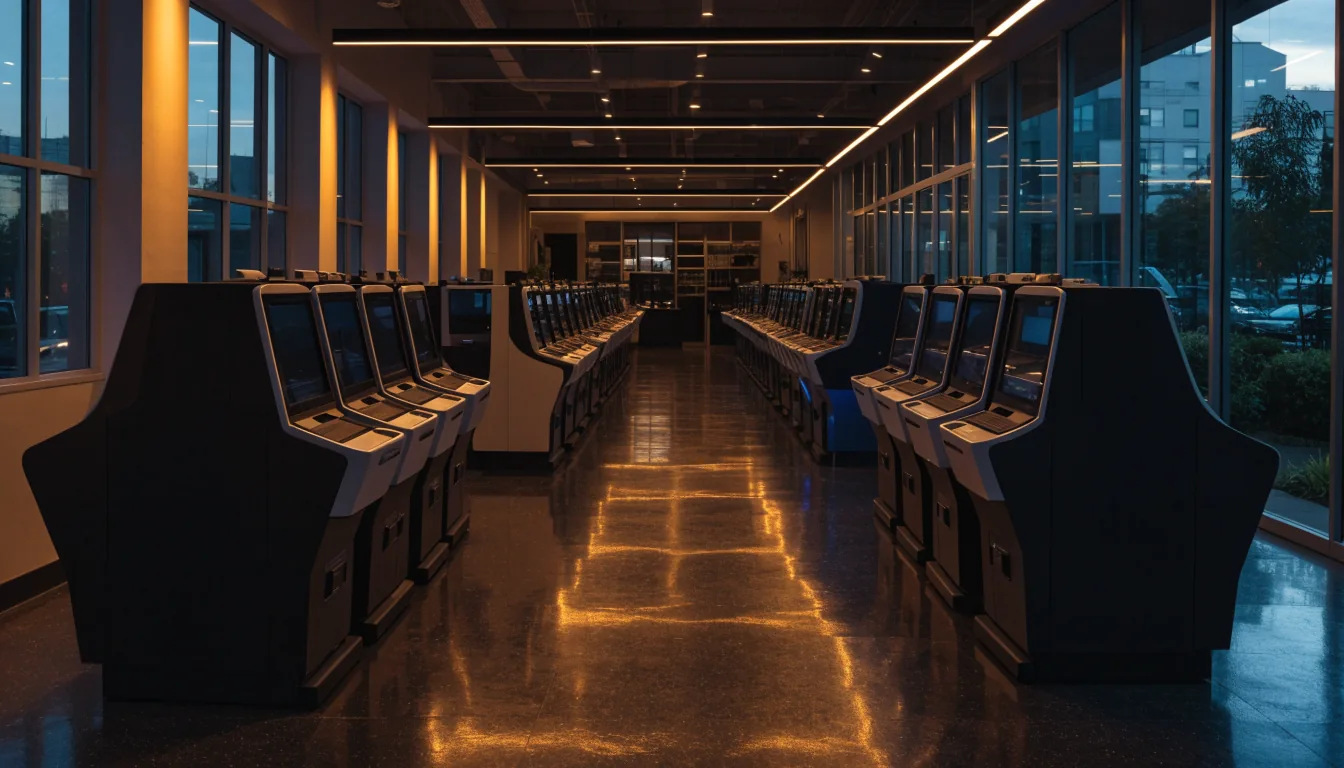
Table of Contents
- What “Pokies Parlour” Means in the Australian Casino Context
- Casino Locations and Access Across Australia
- Casino Hours, Entry and Venue Facilities
- Sign-Up Bonuses and Australia’s Interactive Gambling Rules
- Playing Online or Trying a Free Version
- Free Chips and Spins: What the Evidence Can Establish
- How to Read a Pokies Parlour Review
- Bonus Claims Beyond the Sign-Up Offer
- VIP Parlour Claims and Physical Casino Entry
- Real-Money Play and the Limits of Online Verification
What “Pokies Parlour” Means in the Australian Casino Context
“Pokies parlour” is an informal phrase that can suggest a physical gaming venue, but it is not, by itself, a formal category of Australian casino or evidence that a particular venue is licensed. In ordinary use, “pokies” refers to gaming machines. A parlour, in this context, might mean a room or venue where such machines are available; the phrase can also appear in the name or description of an online service. Those uses should not be treated as interchangeable.
For a discussion of Australian casinos, the useful distinction is between a physical property operating under a casino licence issued by its state or territory, and a website that adopts casino-like language. A venue’s legal status comes from its jurisdictional licensing arrangements, not from a label such as “parlour”, “casino” or “pokies”. Conversely, familiar wording on a website does not establish that the site represents a physical casino or has the status of one.
The phrase also has no precise scale built into it. It might evoke a dedicated room, a gaming area within a larger property, or simply an informal description of a venue associated with gaming machines. Without a named property and reliable information about its operations, the wording does not establish which of these meanings is intended. It should therefore be read as descriptive language rather than as a dependable classification.
Choosing a pokies parlour casino in Australia is easier when you can check the available licensing and payment details before deciding. Use these short verdicts as a reference point for what is known about each option.
License: Curacao eGaming OGL/2023/174/0082 (Dama N.V.) · Min. deposit: A$15 LevelUp Casino is listed under Curacao eGaming licence OGL/2023/174/0082, held by Dama N.V. Its minimum deposit is A$15.
License: Curacao · Payout speed: crypto 30-60 minutes, fiat 1-5 days · Min. deposit: A$10 Wild Tokyo has a Curacao licence and a minimum deposit of A$10. Listed payout times are 30–60 minutes for crypto and 1–5 days for fiat.
License: Curacao, operated by Dama N.V. 7Bit Casino is operated by Dama N.V. and holds a Curacao licence.
License: Tobique Gaming Commission · Payout speed: crypto ~10-15 minutes, fiat 1-5 days · Min. deposit: A$30 SkyCrown is licensed by the Tobique Gaming Commission. Its listed payout times are around 10–15 minutes for crypto and 1–5 days for fiat, with a A$30 minimum deposit.
Payout speed: crypto under 1 hour, PayID 1-3 business days · Min. deposit: A$20 (A$30 to qualify for the bonus) Ricky Casino lists crypto payouts in under an hour and PayID payouts in 1–3 business days. The minimum deposit is A$20, or A$30 to qualify for the bonus.
License: Curacao eGaming (Hollycorn N.V., since 2017) · Min. deposit: A$20-30 (depends on the offer) Playfina Casino has a Curacao eGaming licence held by Hollycorn N.V., which dates to 2017. Its minimum deposit is A$20–30, depending on the offer.
License: Curacao – Antillephone N.V. (Versus Odds B.V.) · Min. deposit: EUR 20 Thor Casino is licensed in Curacao by Antillephone N.V. for Versus Odds B.V. Its stated minimum deposit is EUR 20.
License: Curacao OGL/2024/1335/0780 · Min. deposit: EUR 20 Vegaz Casino holds Curacao licence OGL/2024/1335/0780. Its stated minimum deposit is EUR 20.
License: international iGaming licence – jurisdiction not named in the source · Payout speed: PayID 1-24 hours · Min. deposit: A$30 (PayID from A$10) House of Pokies lists an international iGaming licence, though the jurisdiction is not named in the source. PayID payouts are listed at 1–24 hours; the minimum deposit is A$30, or A$10 when using PayID.
License: Curacao eGaming (Roby Games Ltd) Roby Casino is listed as holding a Curacao eGaming licence through Roby Games Ltd.
Australian casinos are not all defined by a single national venue model. Their operating licences are issued by the relevant state or territory, so the status of a physical property is tied to its local jurisdiction. This matters when interpreting broad descriptions: the presence of gaming machines does not, on its own, make a location a casino, while calling a venue a parlour does not show that it holds a casino licence. The terms describe different things—one may refer to equipment or a room, the other to a regulated property.
The scale of gaming-machine provision in casinos can be expressed through a specific national measure. Across Australian casinos, 3,308 gaming machines are endorsed on venue licences and installed. That figure concerns machines in casino properties, not every machine in every kind of Australian gaming venue. It also does not make “pokies parlour” a formal nationwide venue type. A count of licensed and installed machines is a measure of equipment; it does not settle how a particular venue should be described.
Broader counts of casinos and gambling locations require more care. A specialist review has reported more than 20 full-scale casinos across Australia and gambling activity in 147 cities. These are attributed figures rather than fixed definitions of the market: the underlying subject can change, and the counts depend on what the source includes as a casino, city or gambling location. They should not be read as a current official register or as proof that every place included is a casino with gaming machines. For the meaning of “pokies parlour”, the distinction between a regulated casino property and a more general gaming venue is more informative than an unqualified total.

The online use of similar wording creates a separate interpretive problem. A website may call itself a casino or use “pokies parlour” in its branding, but naming alone does not identify a physical venue, establish a casino licence, or verify the service’s regulatory status. A domain, brand or page title is evidence only of the words being used. It cannot substitute for jurisdiction-specific information about a property or determine what kind of service is being described. The phrase should not be used as a shortcut from “casino-sounding name” to “licensed Australian casino”.
This distinction sets a practical scope for the term. When “pokies parlour” is used to describe an Australian casino context, it is best understood as informal shorthand for a physical gaming area or venue associated with machines, unless more specific evidence establishes a different meaning. It should not be mistaken for an official licence category, a guarantee of casino status, or a reliable description of an online service. The wording may be familiar, but its meaning depends on the property or service to which it is applied.
Casino Locations and Access Across Australia
Physical casino locations are distributed across Australia’s states and territories, with each property operating under a licence issued by its local jurisdiction. This makes location more than a matter of naming a city: the relevant state or territory is also the level at which the venue’s casino licence is issued. The nationwide minimum age for casino entry is 18.
The nationwide minimum age for casino entry in Australia is 18.
Some geographic counts should be read as snapshots rather than permanent totals. A specialist review reports three casinos across three Northern Territory cities. In that account, Alice Springs is identified as the territory’s city with the most casinos, although the count given for the city is one. These figures describe the review’s particular listing; they should not be treated as a timeless census of casino locations.
One named Northern Territory property is Lasseters Casino, at 93 Barrett Drive, Alice Springs, NT 0870, Australia. The address places the venue within Alice Springs rather than merely associating it with the broader territory. The city-level detail is useful when distinguishing a specific property from a regional casino count, particularly where listings group venues by state or territory.
Elsewhere, Jupiters Gold Coast Casino & Hotel is located on Broadbeach Island, on the Gold Coast. The location illustrates why a city or destination label may be broader than a street address: “Gold Coast” identifies the area, while Broadbeach Island gives a more precise geographic reference. Both descriptions concern physical venues, not a general claim about casino access across Australia.
The distinction between state-level licensing and national entry conditions is important. Licensing attaches to an individual property through its local jurisdiction, while the minimum entry age is consistent nationwide. A casino’s location therefore establishes which jurisdiction is relevant to the property; it does not change the age threshold. Across Australia, casino entry is restricted to people aged 18 or older.
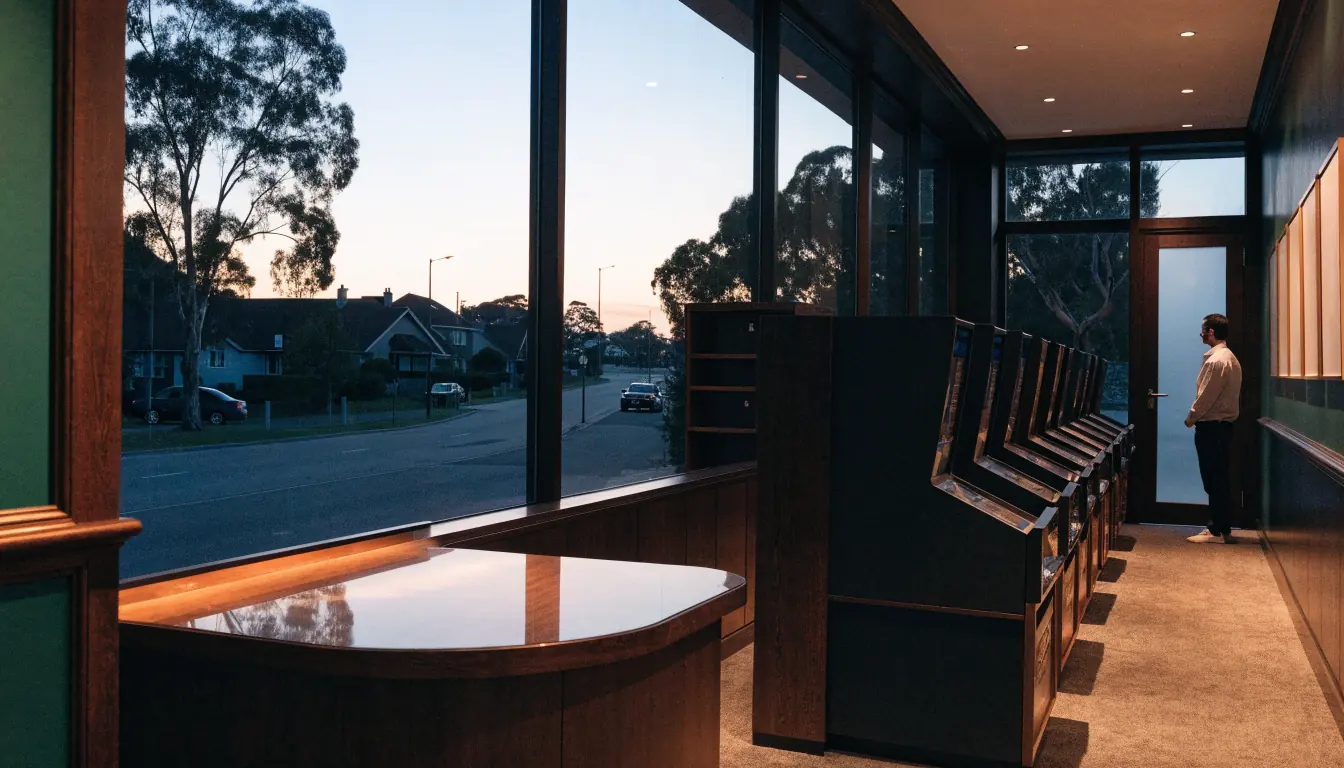
Entry also involves identification. Major Australian casinos require valid photo identification, so being of age alone does not remove the need to establish identity at the venue. The rule concerns access to the physical casino and should not be confused with the different access policies that may apply to other parts of a property.
A location name on its own is not a complete description of access. Alice Springs and the Gold Coast identify areas in which named casinos are situated, while the specific venue and its local jurisdiction provide the more useful points of reference. In practical terms, a geographic listing can help distinguish one property from another, but it does not replace the relevant entry conditions: the national age minimum and the photo-identification requirement at major casinos.
These details provide a grounded way to read references to Australian casino locations. Regional counts may reflect a particular listing and can change, whereas the named addresses identify specific properties. The licensing framework remains local to each property, and the nationwide age threshold applies across jurisdictions.
Casino Hours, Entry and Venue Facilities
Major Australian casinos operate around the clock. This describes their general operating schedule, but it does not establish that every service or facility within a property is available at every hour. Gaming-machine areas are part of physical venues; their operating context should not be confused with access to an online site using similar parlour-style language.
Entry is subject to age and identification requirements. The minimum age for casino entry is 18 across Australia, and valid photo identification is required at all major casinos. These conditions apply to physical casino access, rather than determining whether an online service is lawful or licensed. A venue’s continuous operation does not alter either requirement.
National gaming machine total 3,308 machines endorsed on venue licences
Minimum casino entry age 18 years old
Identification requirement Valid photo identification
The national total for gaming machines installed in casinos and endorsed on venue licences is 3,308. This is an aggregate across Australian casinos, not a count for an individual property or a guarantee that every machine is available at a particular time. It also does not describe machines in other types of gaming venue. The figure therefore gives a measure of the licensed casino-machine estate, rather than a guide to the size or facilities of any one parlour-style setting.
Hours, entry rules and machine totals describe different aspects of the physical casino environment. Continuous operation concerns the venue schedule; age and photo identification govern entry; the machine total records licensed installations across the country. None of these details, on its own, establishes what a particular property offers beyond those stated conditions.
Sign-Up Bonuses and Australia’s Interactive Gambling Rules
A sign-up bonus is an inducement attached to opening an account or beginning to use a service. Terms such as “no-deposit bonus” may imply that a new customer can receive a promotional benefit without first paying in. In the Australian context, however, the wording of an offer cannot establish that the service behind it may lawfully be provided or advertised.
The central distinction is between a promotion and the underlying activity. The Interactive Gambling Act 2001 makes it illegal for operators to provide real-money online casino games to people physically located in Australia. Casino-style games such as slots, poker, blackjack and roulette fall within the prohibited services when supplied to Australian customers. A bonus does not change the nature of the service: describing an offer as free, introductory or limited to new accounts does not make prohibited online casino gambling lawful.

The same distinction applies to promotional material. Advertising real-money online casinos to Australian audiences is prohibited. A sign-up page, banner or bonus description should therefore not be treated as an ordinary consumer offer merely because it states terms or appears available. Nor does the presence of a bonus claim demonstrate that an operator has Australian authorisation to provide the associated service.
The federal enforcement role
The Australian Communications and Media Authority (ACMA) is responsible for enforcing the Interactive Gambling Act 2001 and monitoring compliance with federal interactive gambling laws. Where a website provides prohibited services or advertises them in Australia, ACMA can request that Australian internet service providers block access to it. Blocking is an enforcement measure directed at access to the website; it does not turn a different address or presentation of the same service into evidence of lawful operation.
ACMA reports that, following enforcement actions, it has blocked more than 1,455 illegal gambling and affiliate websites since November 2019. It has also reported withdrawals by illegal services after enforcement began in 2017, but the available totals conflict: one account says more than 210 services withdrew, while another says more than 190. Those figures should not be collapsed into a single precise total. Both describe enforcement activity, not proof that every service encountered by Australian users has been assessed or removed.
The Act also provides for substantial daily maximum penalties for operators that breach it: $360,000 for individuals and $1.8 million for bodies corporate. These penalties concern violations of the law by individuals or companies; they should not be misread as a statement that a person who uses an offshore casino faces a fine. The legal framework is directed at the provision and advertising of prohibited interactive gambling services.
Legal Prohibition
The Interactive Gambling Act 2001 makes it illegal to provide real-money online casino games to people physically located in Australia.
What a bonus claim can establish
A phrase such as “pokies parlour sign-up bonus” identifies a promotional claim, not a verified entitlement. The wording alone does not establish who is making the offer, whether it is genuine, what conditions apply, or whether the service associated with it may legally be supplied in Australia. The same limits apply when the offer is described as a no-deposit bonus or presented as a benefit for registering.
This matters because promotional language can shift attention from the legal character of the service to the apparent value of an inducement. A stated bonus, however attractive its presentation, does not alter the Interactive Gambling Act’s treatment of online casino-style games. It also does not create an exemption from restrictions on advertising those services to Australians. The relevant regulatory question concerns what the operator provides and promotes, not the label placed on the offer.
An offer may also appear in affiliate material rather than on an operator’s own page. That distinction does not establish that the underlying service is lawful, and an affiliate’s description is not an ACMA authorisation. The regulator’s blocking action includes gambling and affiliate websites, illustrating why promotional pages cannot be assumed to sit outside the enforcement framework simply because they refer to an offer rather than hosting a game.

The term “no deposit” is particularly easy to overread. It describes an asserted condition of a promotion, not the full terms of participation and not the status of the operator. Without reliable terms, the phrase cannot determine what actions may be required, whether the offer is available in Australia, or whether it is connected to a prohibited service. No inference about legality follows from the absence of an initial payment.
Accordingly, sign-up and no-deposit claims should be interpreted as claims about promotion, not as evidence of regulatory approval. ACMA’s role, the statutory prohibition on supplying online casino games to people in Australia, and the restriction on advertising such services provide the relevant framework. A bonus label cannot override that framework.
Playing Online or Trying a Free Version
An online page using “pokies parlour” language is not the same thing as a physical casino’s gaming facilities. The phrase may appear in a site’s name, page title or game description, but none of those uses establishes that the business is an Australian casino or that its online services are authorised here. Physical casino licences are issued by state and territory jurisdictions; they do not, by themselves, establish permission to provide casino games online.
A site loading in a browser is similarly limited evidence. It indicates that a particular address can be reached at that moment, not that the service has Australian approval. Account pages, payment interfaces or other account traffic may also be available without demonstrating local licensing. Conversely, an address failing to load does not show that a service has ceased operating everywhere: access can be affected by website blocking, and alternate domains may appear over time.
Regulatory Enforcement
ACMA can request that Australian internet service providers block access to websites that provide prohibited services or advertise them in Australia. Since November 2019, more than 1,455 illegal gambling and affiliate websites have been blocked.
That distinction matters because Australian internet access is not a reliable test of regulatory status. ACMA can ask internet service providers to block sites offering prohibited interactive gambling services or advertising them. A specialist review has reported blocking action involving Fair Go-related alternate domains; such reporting should be understood as a time-specific account of enforcement, not as proof of a service’s present status. The appearance of a new address does not change the legal position or establish that the operator is authorised.
“Free version” is also an ambiguous description. It might refer to a demonstration mode, a promotional label or another form of access, but the wording alone does not establish whether real money, deposits, prizes or other consideration are involved. Nor does it establish who operates the service or what rules apply to it. A no-cost label is therefore not a substitute for evidence about the service’s format and regulatory status.
This is separate from the experience at a physical casino. A venue’s machines are part of an in-person, jurisdictionally licensed operation; a web page that imitates the language or appearance of a parlour is an online service. Similar terminology does not make the two equivalent. In particular, a free-play label does not make an online site a physical venue, and a physical casino’s existence does not validate an unrelated website.
The Interactive Gambling Act 2001 prohibits operators from providing real-money online casino-style games to people located in Australia. That category includes slots and table games, as well as online poker. The distinction between a website being technically reachable and an online casino being lawful is therefore not merely semantic: accessibility says nothing conclusive about whether the service may be offered to Australians.

Claims about free access should consequently be read narrowly. They may describe how a page presents itself, but they do not establish that a game is a licensed Australian casino product, that it is genuinely free of financial involvement, or that the operator has permission to provide it. Where the description does not make those matters clear, the label itself cannot settle them. A digital imitation of a casino environment remains distinct from the regulated operation of a physical casino, and neither a domain name nor a free-play claim bridges that gap.
Free Chips and Spins: What the Evidence Can Establish
“Free chips” and “free spins” are promotional expressions, not evidence that a particular offer exists or that it is available to people in Australia. Their wording alone establishes neither the identity of the provider nor the conditions attached to an offer. A claim should therefore be treated as an assertion requiring verification, rather than as a confirmed feature of a casino.
The terms can also obscure important differences. “Free” may describe a promotional credit or a chance to play without an ordinary payment, but it does not, by itself, explain how the offer works. It says nothing about eligibility, restrictions, withdrawal conditions or whether the advertised benefit is actually available. Without reliable, offer-specific terms, those details cannot be inferred from a headline, banner or brief description.
The same caution applies to claims framed around a “free” casino experience. A site may use that language to describe a demonstration mode, a promotional incentive or a general marketing message. These are not interchangeable. Nor does the label establish that an offer is free of conditions or that it relates to a physical casino. Promotional wording should not be read as a complete description of the service.
Promotional Claims
Attention Promotional terms like “free chips” or “free spins” are assertions that require verification and do not guarantee availability or legality.
A further distinction is necessary between the existence of promotional language and the regulatory status of the service using it. A website being accessible, receiving account traffic or appearing at an alternate web address does not establish that it is an Australian-licensed online casino. Those observations cannot substantiate the legitimacy of a free-chip or free-spin claim, either. A change in domain address is not, on its own, evidence that an offer or operator has acquired a different status.
The wording may also leave unclear who is making the claim. A third-party page can repeat promotional language without demonstrating that the named service issued the offer, that the terms remain current, or that the promotion applies to Australian users. Repetition across pages does not turn an unsubstantiated claim into confirmation. Specific terms need to be attributable to the relevant provider and assessed in their applicable context.
For a physical venue, promotional language encountered online should not be taken as proof of an on-site benefit. A casino’s physical presence and an online claim about free play are separate matters; one does not verify the other. Likewise, an offer described as relating to a “parlour” cannot be identified as a real venue or service from that word alone.
Accordingly, free-chip and free-spin wording can establish only that a promotional claim has been made. It cannot establish the offer’s availability, conditions, or connection to a verified venue or service. Where those particulars are not independently clear, the claim remains unconfirmed.

How to Read a Pokies Parlour Review
A review of a pokies parlour is only as useful as the claims it can substantiate. Descriptions of atmosphere, service or game choice may reflect an individual account, while statements about a venue’s legal status concern a different kind of evidence. These categories should not be treated as interchangeable: a favourable personal assessment does not establish regulatory standing, and a licence does not establish that a venue is enjoyable or well run.
In Australia, casino regulation sits with state and territory authorities. Each casino property operates under a licence issued by the jurisdiction in which it is located. That framework provides relevant context for assessing claims about a physical casino, but it does not amount to an endorsement of the venue’s quality. Nor does the existence of a jurisdictional licensing system verify a particular statement made in a review.
Separate evidence from opinion
A careful review distinguishes what can be checked from what is evaluative. A claim about a venue’s location or identity is different from a claim that its staff are attentive, its facilities are comfortable or its gaming floor is appealing. The latter may be meaningful as a report of one person’s experience, but it should not be presented as a settled finding without corroboration.
The wording matters. “The reviewer found the service helpful” attributes an assessment to its source. “The service is helpful” presents the same judgement as a general fact. Where a review does not explain how an assessment was reached, its scope should remain limited to the reviewer’s stated experience.
The same distinction applies to broad labels such as “trusted,” “top-rated” or “best.” Such language may summarise an opinion, but it does not show what was measured or whose judgement is represented. A review that explains its criteria and identifies the basis for factual claims is easier to assess than one relying on unsupported rankings.
Reviewing Casino Claims
- Distinguish between personal opinions and verifiable facts.
- Verify that regulatory claims are kept separate from quality judgements.
- Recognise that a single review does not establish market-wide facts.
Check what a review actually establishes
A review can provide a description, an opinion, or evidence for a specific factual claim. Those functions should be read separately. For example, a detailed account of a visit may help convey the reviewer’s impressions, but it does not independently establish the venue’s licensing position. Conversely, licensing information addresses regulatory status, not customer experience.
The term “pokies parlour casino review” can also blur the distinction between a physical casino and a website using similar wording. A review should make clear which kind of service it discusses. Similar names or branding are not proof that two entities are connected, and a confident tone does not resolve that uncertainty.
Reviews also have limits of time and perspective. A single account cannot establish that every visitor will have the same experience, while general conclusions require evidence broader than an isolated impression. Where the review does not identify its basis, the appropriate reading is narrow: it records a claim, rather than confirming a market-wide fact.
For a restrained assessment, the central questions are therefore whether factual statements are attributable, whether opinions are clearly labelled, and whether regulatory claims are kept distinct from quality judgements. On that basis, a review may be informative without being conclusive. The available licensing framework supplies context for evaluating casino status; it does not establish the performance or merits of any particular operator.
Bonus Claims Beyond the Sign-Up Offer
Bonus language can extend beyond an account-opening offer. A site may describe ongoing rewards, returning-player benefits or other promotional extras as part of a general “pokies parlour” bonus proposition. Such wording identifies a marketing claim, not proof that a particular benefit exists, applies to Australian users or can lawfully be provided.

The distinction matters because broad labels can obscure what is actually being promised. A claim may refer to a promotion available only under specific conditions, to a benefit described in general terms, or simply to promotional copy. Without substantiated terms linked to the claim, it is not possible to establish its value, eligibility conditions, duration or availability. Those details should not be inferred from a headline or a bonus label.
Nor does the appearance of a promotion establish the status of the service carrying it. A website may load, receive account traffic or use an alternate domain without thereby becoming an Australian-licensed online casino. A bonus banner, account page or promotional message is not evidence of local authorisation. The same limitation applies where a site presents the wording as a general feature rather than as a sign-up incentive.
This is separate from whether a named offer is genuine. Even a clearly stated promotion would need to be assessed against its actual terms and the legal context for online gambling services in Australia. Marketing language alone cannot establish either point. In particular, describing a benefit as a “parlour” reward does not demonstrate that it relates to a physical casino venue; terminology can be reused online without proving a connection to a licensed property.
For an evidence-based assessment, the relevant questions are narrow: what benefit is expressly described, which service makes the claim, who is said to qualify, and whether the stated conditions are available for examination. If those elements are not established, the claim remains unverified rather than a confirmed bonus. This does not imply that every promotion is fictitious; it limits the conclusion to what the wording and supporting information can show.
Verification
Marketing language and bonus labels cannot override the legal framework established by the Interactive Gambling Act 2001.
General bonus claims should therefore be read as promotional assertions, not as established features of an Australian casino service. Neither repeated wording nor a functioning web address supplies the missing evidence of a benefit or of the service’s regulatory status.
VIP Parlour Claims and Physical Casino Entry
“VIP parlour” can suggest a special tier within a physical casino, but the label alone does not establish that a venue operates such a programme. Nor does it show that particular benefits, membership conditions or entry privileges are available. Those details require evidence tied to the venue itself; promotional wording is not proof of a formal status.
The verified baseline for entry to an Australian casino is consistent nationwide: a person must be at least 18. That age rule concerns admission to the casino, not eligibility for a VIP category. It does not establish that reaching a particular age, joining a club or holding a membership card provides access to restricted areas or services.

The distinction matters because “VIP” may be used loosely in descriptions of gaming venues. Without specific, reliable terms, it cannot support claims about priority entry, dedicated rooms, complimentary services, spending thresholds or other privileges. None of those features follows from the word itself. A venue’s use of the label should therefore be treated as a claim requiring separate substantiation, rather than as a recognised Australian-wide standard.
Physical casino entry and VIP status are also different questions. The nationwide minimum age sets an access threshold; it does not confirm a venue’s membership structure or the rules for any purported tier. Conversely, a VIP label does not displace the minimum age requirement. Any description that presents special status as a way around ordinary entry conditions would be unsupported by the established rule.
Accordingly, the term can identify the subject of a venue’s claim, but cannot by itself verify a programme or its benefits. The firm point is narrower: casino entry in Australia has a minimum age of 18. Claims about VIP eligibility and privileges need venue-specific evidence and should not be inferred from terminology alone.
Real-Money Play and the Limits of Online Verification
“Real money” describes a payment or wagering feature; it does not establish that an online casino is authorised to provide services in Australia. The distinction matters because casino licensing in Australia applies at state and territory level to physical properties. Each property operates under a licence issued by the jurisdiction where it is located. That framework does not, by itself, confer permission on a website to offer casino games to people in Australia.
Under the Interactive Gambling Act 2001, operators are prohibited from providing real-money online casino games to customers physically located in Australia. The prohibition covers casino-style services such as slots, poker and table games. A website’s own wording, including claims about real-money play, cannot override that legal position or establish an Australian authorisation.
Nor does technical access settle the question. A site may load, accept account traffic or appear at an alternate domain without being an Australian-licensed online casino. Those observations concern how a website can be reached, not whether its service is lawful or locally licensed. An alternate address is not evidence of a different regulatory status.
The phrase “pokies parlour casino real money” can therefore combine two separate ideas: licensed gaming at a physical casino and real-money casino play online. The former belongs to the state and territory licensing system; the latter is prohibited when supplied by operators to customers in Australia. The existence of licensed physical casinos cannot be used as evidence that a comparable online service is authorised.
Regulatory status should be assessed from the applicable law and relevant official information, not inferred from a brand’s claims, a working address or an account interface. In this market, those features are not substitutes for legal authority, and their presence does not change the prohibition on providing real-money online casino games to people in Australia.
Prepared by the Voodoo Casino editorial staff.